


Master of Business Administration
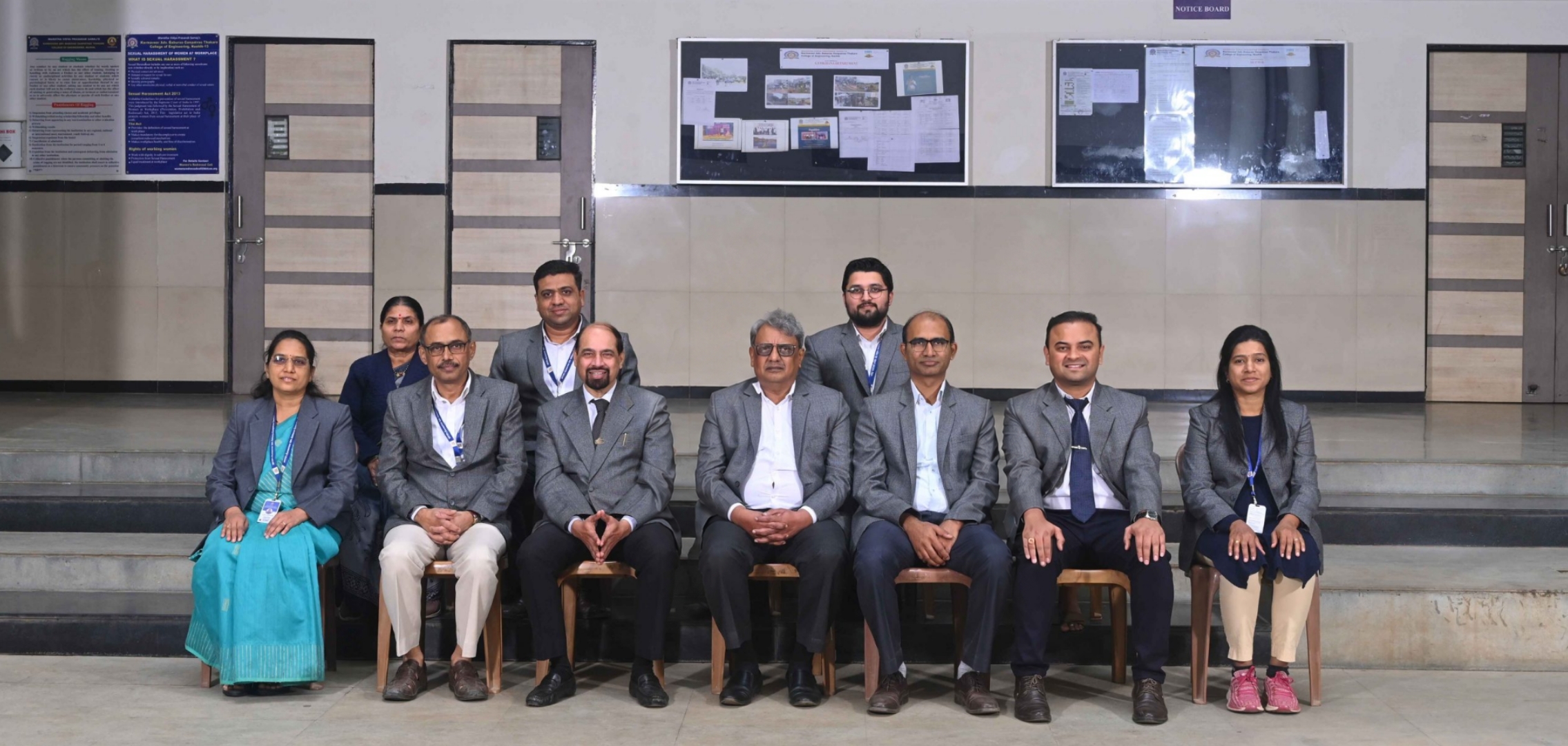 |
Establishment Year : 2009 Intake: 120 Duration of Course: 02 Years Location: Building ‘A’, Third Floor Contact: 0253-2571439 Ext: 141 |
Master of Business Administration
To be the center of management excellence for building management development capabilities in Leadership, Innovation and Research in the domain of multi-disciplinary Management profession thereby contributing to the development of business and the common masses.
To develop Managers and Entrepreneurs for the business and industry by inculcating the values for discipline, quality and transparency thereby possessing managerial skills, acumen and passion to lead their organization of employment/self-employment.
- PO1 : Engineering Knowledge :
Apply knowledge of mathematics, natural science, computing, engineering fundamentals and an engineering specialization as specified in WK1 to WK4 respectively to develop to the solution of complex engineering problems.
- PO2 : Problem Analysis :
Identify, formulate, review research literature and analyze complex engineering problems reaching substantiated conclusions with consideration for sustainable development.(WK1 to WK4)
- PO3 : Design/Development of Solutions :
Design creative solutions for complex engineering problems and design/develop systems/components/processes to meet identified needs with consideration for the public health and safety, whole-life cost, net zero carbon, culture, society and environment as required.(WK5)
- PO4 : Conduct Investigations of Complex Problems :
Conduct investigations of complex engineering problems using research-based knowledge including design of experiments, modelling, analysis & interpretation of data to provide valid conclusions. (WK8).
- PO5 : Engineering Tool Usage :
Create, select and apply appropriate techniques, resources and modern engineering & IT tools, including prediction and modelling recognizing their limitations to solve complex engineering problems. (WK2 and WK6)
- PO6 : The Engineer and The World :
Analyze and evaluate societal and environmental aspects while solving complex engineering problems for its impact on sustainability with reference to economy, health, safety, legal framework, culture and environment. (WK1, WK5, and WK7).
- PO7 : Ethics :
Apply ethical principles and commit to professional ethics, human values, diversity and inclusion; adhere to national & international laws.(WK9)
- PO8 : Individual and Collaborative Team work :
Function effectively as an individual, and as a member or leader in diverse/multi-disciplinary teams.
- PO9 : Communication :
Communicate effectively and inclusively within the engineering community and society at large, such as being able to comprehend and write effective reports and design documentation, make effective presentations considering cultural, language, and learning differences
- PO10 : Project Management and Finance :
Apply knowledge and understanding of engineering management principles and economic decision-making and apply these to one’s own work, as a member and leader in a team, and to manage projects and in multidisciplinary environments.
- PO11 : Life-Long Learning :
Recognize the need for, and have the preparation and ability for
- Independent and life-long learning
- Adaptability to new and emerging technologies and
- Critical thinking in the broadest context of technological change.(WK8)
- PSO-1: Ability to analyze organizational situations using appropriate management concepts, analytical techniques, and domain knowledge to make effective and data-driven managerial decisions. (Knowledge Application & Decision Making)
- PSO-2: Ability to lead teams, manage organizational functions, and demonstrate initiative in developing and managing business ventures in dynamic and competitive environments. (Leadership, Entrepreneurship, Business Management)
- PSO-3: Ability to integrate ethical values and sensitivity to societal and economic contexts while designing and implementing managerial solutions. (Ethics, Social Sensitivity).
- PEO1:
Graduates of the MBA program will successfully integrate core, cross-functional and inter-disciplinary aspects of management theories, models and frameworks with the real world practices and the sector specific nuances to provide solutions to real world business, policy and social issues in a dynamic and complex world.
- PEO2:
Graduates of the MBA program will possess excellent communication skills, excel in cross-functional, multi-disciplinary, multi-cultural teams, and have an appreciation for local, domestic and global contexts so as to manage continuity, change, risk, ambiguity and complexity.
- PEO3:
Graduates of the MBA program will be appreciative of the significance of Indian ethos and values in managerial decision making and exhibit value centered leadership.
- PEO4:
Graduates of the MBA program will be ready to engage in successful career pursuits covering a broad spectrum of areas in corporate, non-profit organizations, public policy, entrepreneurial ventures and engage in life-long learning.
- PEO5:
Graduates of the MBA program will be recognized in their chosen fields for their managerial competence, creativity & innovation, integrity & sensitivity to local and global issues of social relevance and earn the trust & respect of others as inspiring, effective and ethical leaders, managers, entrepreneurs, intrapreneurs and change agents.
Major Specializations (can be selected as Major or Minor)
1.
Marketing Management (MKT)
2.
Financial Management (FIN)
3.
Human Resources Management (HRM)
4.
Operations & Supply Chain Management (OSCM)
5.
Business Analytics (BA)
6.
Rural & Agribusiness Management (RABM)
7.
Pharma & Healthcare Management (PHM)
To be the center of management excellence for building management development capabilities in Leadership, Innovation and Research in the domain of multi-disciplinary Management profession thereby contributing to the development of business and the common masses.
To develop Managers and Entrepreneurs for the business and industry by inculcating the values for discipline, quality and transparency thereby possessing managerial skills, acumen and passion to lead their organization of employment/self-employment.
- PO1 : Engineering Knowledge :
Apply knowledge of mathematics, natural science, computing, engineering fundamentals and an engineering specialization as specified in WK1 to WK4 respectively to develop to the solution of complex engineering problems. - PO2 : Problem Analysis :
Identify, formulate, review research literature and analyze complex engineering problems reaching substantiated conclusions with consideration for sustainable development.(WK1 to WK4) - PO3 : Design/Development of Solutions :
Design creative solutions for complex engineering problems and design/develop systems/components/processes to meet identified needs with consideration for the public health and safety, whole-life cost, net zero carbon, culture, society and environment as required.(WK5) - PO4 : Conduct Investigations of Complex Problems :
Conduct investigations of complex engineering problems using research-based knowledge including design of experiments, modelling, analysis & interpretation of data to provide valid conclusions. (WK8). - PO5 : Engineering Tool Usage :
Create, select and apply appropriate techniques, resources and modern engineering & IT tools, including prediction and modelling recognizing their limitations to solve complex engineering problems. (WK2 and WK6) - PO6 : The Engineer and The World :
Analyze and evaluate societal and environmental aspects while solving complex engineering problems for its impact on sustainability with reference to economy, health, safety, legal framework, culture and environment. (WK1, WK5, and WK7). - PO7 : Ethics :
Apply ethical principles and commit to professional ethics, human values, diversity and inclusion; adhere to national & international laws.(WK9) - PO8 : Individual and Collaborative Team work :
Function effectively as an individual, and as a member or leader in diverse/multi-disciplinary teams. - PO9 : Communication :
Communicate effectively and inclusively within the engineering community and society at large, such as being able to comprehend and write effective reports and design documentation, make effective presentations considering cultural, language, and learning differences - PO10 : Project Management and Finance :
Apply knowledge and understanding of engineering management principles and economic decision-making and apply these to one’s own work, as a member and leader in a team, and to manage projects and in multidisciplinary environments. - PO11 : Life-Long Learning :
Recognize the need for, and have the preparation and ability for- Independent and life-long learning
- Adaptability to new and emerging technologies and
- Critical thinking in the broadest context of technological change.(WK8)
- PSO-1: Ability to analyze organizational situations using appropriate management concepts, analytical techniques, and domain knowledge to make effective and data-driven managerial decisions. (Knowledge Application & Decision Making)
- PSO-2: Ability to lead teams, manage organizational functions, and demonstrate initiative in developing and managing business ventures in dynamic and competitive environments. (Leadership, Entrepreneurship, Business Management)
- PSO-3: Ability to integrate ethical values and sensitivity to societal and economic contexts while designing and implementing managerial solutions. (Ethics, Social Sensitivity).
- PEO1:
Graduates of the MBA program will successfully integrate core, cross-functional and inter-disciplinary aspects of management theories, models and frameworks with the real world practices and the sector specific nuances to provide solutions to real world business, policy and social issues in a dynamic and complex world.
- PEO2:
Graduates of the MBA program will possess excellent communication skills, excel in cross-functional, multi-disciplinary, multi-cultural teams, and have an appreciation for local, domestic and global contexts so as to manage continuity, change, risk, ambiguity and complexity.
- PEO3:
Graduates of the MBA program will be appreciative of the significance of Indian ethos and values in managerial decision making and exhibit value centered leadership.
- PEO4:
Graduates of the MBA program will be ready to engage in successful career pursuits covering a broad spectrum of areas in corporate, non-profit organizations, public policy, entrepreneurial ventures and engage in life-long learning.
- PEO5:
Graduates of the MBA program will be recognized in their chosen fields for their managerial competence, creativity & innovation, integrity & sensitivity to local and global issues of social relevance and earn the trust & respect of others as inspiring, effective and ethical leaders, managers, entrepreneurs, intrapreneurs and change agents.
Major Specializations (can be selected as Major or Minor) |
1. Marketing Management (MKT) |
2. Financial Management (FIN) |
3. Human Resources Management (HRM) |
4. Operations & Supply Chain Management (OSCM) |
5. Business Analytics (BA) |
6. Rural & Agribusiness Management (RABM) |
7. Pharma & Healthcare Management (PHM) |